Introduction
When your child is bullied, your first feelings might be rage or panic. That's normal. But the most effective first step is making them feel safe - and only then taking action.
Signs
- Your child starts telling fragments of a story.
- They become very quiet or very angry after school.
- You find messages, photos, or notes that worry you.
- A teacher or another parent flags something.
What you can do
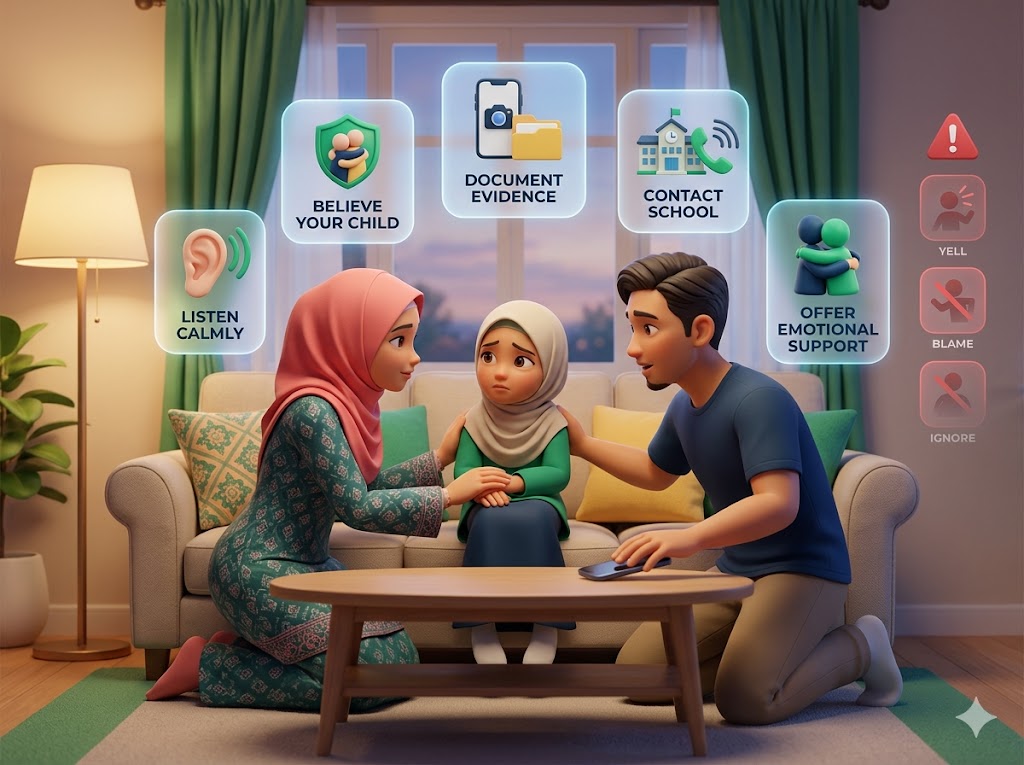
- Listen first, think later - let them finish before you act.
- Reassure: "I believe you. This is not your fault."
- Avoid: "Hit back," or "Just ignore it." Both rarely work.
- Document - date, location, exact words, witnesses.
- Engage the school in writing - request a meeting with the class teacher and counsellor.
- File a HeroFriends report if the school is slow to act, or the case is serious.
- Care for yourself too - your child is supported through your own emotional steadiness.
When to get help
If your child shows signs of depression, anxiety, or talks about self-harm, seek a professional counsellor. The Children's Helpline 15999 supports families 24 hours.
After you read
If you or someone you care about is going through this, you can file a confidential report. Every report is handled by trained HeroFriends officers under the Anti-Bullying Act 2026.
Make a Report Now